Blessings, luck and omens
Rice and petals, the broom, the horseshoe, the broken glass and other ways of asking for luck.
A wedding is a time when people ask for luck. Rice and petals are thrown, bells rung, a horseshoe hung, a glass broken, a coconut cracked. Many of these customs began as a wish for children, wealth or protection from harm, and they remain because they are fun, meaningful and shared.
Throwing and showering
Rice is thrown at the couple in many parts of the world as a wish for fertility and plenty, and in some places is replaced by petals or birdseed. Italian weddings use confetti sugared almonds, and Moroccan guests shower the couple with dates and milk. Indian brides throw rice behind them as they leave, to give back to the parental home. In Ukraine and Russia guests may throw grain, coins and sweets.
Protection against harm
Many cultures guard against the evil eye or jealous spirits. The Jewish groom breaks a glass, in the Greek wedding the bride may carry a lump of sugar, and in Scotland the blackening of the bride is a boisterous prank. In China firecrackers scare off bad luck, and in Iran a sugar cone is rubbed above the couple's heads. In parts of Africa libations pour water or drink to the ancestors.
Omens and dates
Weather, day and month can also be omens. Rain on the day is lucky in many places, from Hindu communities who see it as a blessing to Western brides who say it is good luck. Dates are chosen by astrologers in India, by the lunar calendar in China, and avoided in Lent, Ramadan or the Omer, when weddings are not held by custom.
Written by the EveryShaadi desk with AI assistance. Background on Blessings, luck and omens (kind of custom). Customs differ from place to place and family to family. If this is your tradition and we have it wrong, tell us.
 🇮🇹 Rome, ItalyAncient Roman wedding
A veiled Roman bride, omens checked, was led from her family home to her groom's house.Rite · The weeks before
 🇮🇳 IndiaTulasi Vivahतुलसी विवाह (Sanskrit)
The symbolic wedding of the holy basil plant to Vishnu that marks the start of the Hindu marriage season.Rite · The weeks before
🇮🇳 IndiaMadisarமடிசார் (Madisar)
The nine-yard sari drape worn by Tamil Brahmin women for weddings and religious ritesAttire · The ceremony
 🇨🇳 China and 1 moreRed String of Fate紅線 (hóngxiàn)
The invisible red cord that ties destined lovers together from birth.Blessing
 🇩🇪 Hamburg, Germany and 3 moreWimpelווימפל
A linen sash made from a baby boy's circumcision cloth that binds the Torah scroll.Adornment · The weeks before
 🇪🇸 Seville, SpainSevillanas
A folk dance from Seville performed by couples at weddings and festivals.Performance · Reception, dance and gifts
 🇪🇸 Spain and 3 moreMantilla
A lace or silk veil worn over the head and shoulders by women in Spain and Latin America for church and weddings.Attire · The weeks before
 🇲🇽 Oaxaca, Mexico and 1 moreHuipilhuīpīlli
The traditional tunic worn by indigenous women in Mexico and Central America for weddings and daily life.Attire · The weeks before
🇮🇳 IndiaOonjal
The decorated swing where the Tamil bride and groom sit to receive blessings during their wedding.Rite · The ceremony
 🇮🇩 Indonesia and 2 moreKenduri
A shared rice meal and prayer gathering that marks weddings and other milestonesFeast custom · The wedding feast
 🇫🇯 FijiTabua
A polished sperm whale tooth exchanged as a gift in Fijian weddings and ceremonies.Gift custom · Engagement and betrothal
 🇯🇵 JapanTamagushitamagushi (玉串)
A decorated sakaki branch offered to kami during Shinto wedding ceremonies and other rites.Rite · The ceremony
🇮🇷 Shiraz, Iran and 5 moreUlulation
A high-pitched trilling sound used to celebrate weddings and share joy across many cultures.Performance · Procession and arrival
 🇱🇦 Laos and 1 moreBaciບາສີ (Lao) / บายศรี (Thai)
The Lao wrist-tying rite that calls a person's souls home and blesses a marriageBlessing · The ceremony
 🇲🇾 Malaysia and 4 moreBaju Kurungباجو كوروڠ
A traditional blouse and skirt worn by Malay women for weddings and official ceremonies.Attire · The ceremony
 🇸🇦 Saudi ArabiaArdahالعرضة
The men's group dance of the Arabian Peninsula performed with drums and poetry at weddings and national eventsPerformance · Reception, dance and gifts
 🇮🇱 IsraelMazel tovמזל טוב
The Jewish phrase said to congratulate someone on a happy occasion or good fortune.Blessing · The ceremony
 🇮🇳 India and 1 moreAlpanaআলপনা
Rice flour floor paintings that mark weddings and festivals in BengalAdornment · The weeks before
 🇹🇷 Sivas, Turkey and 3 moreHalay
A traditional line and circle dance performed at weddings across Turkey and the Caucasus.Performance · Reception, dance and gifts
 🇷🇺 Russia and 2 moreRushnykрушник (Ukrainian), ручнік (Belarusian), ручник/рушник (Russian)
A sacred embroidered cloth that marks life stages and guides the couple during East Slavic wedding ceremonies.Attire · Procession and arrival
🇵🇱 PolandSto lat
A Polish song sung to wish the couple long life and good health during the wedding feast.Performance · The wedding feast
 🇬🇭 Ghana and 2 moreKente clothnwentoma
Hand-woven silk and cotton strips from Ghana that mark weddings and graduationsAttire · The ceremony
 🇲🇦 MoroccoAhidusⴰⵃⵉⴷⵓⵙ (aḥidous)
A collective Berber dance from Morocco performed in circles or lines to celebrate unity and victory.Performance · Reception, dance and gifts
🇮🇱 IsraelSeudat nissuinSeudat nissuin (סעודת נשואין)
The joyful wedding meal that observant Jews eat after the ceremony to fulfill a religious duty.Feast custom · The ceremony
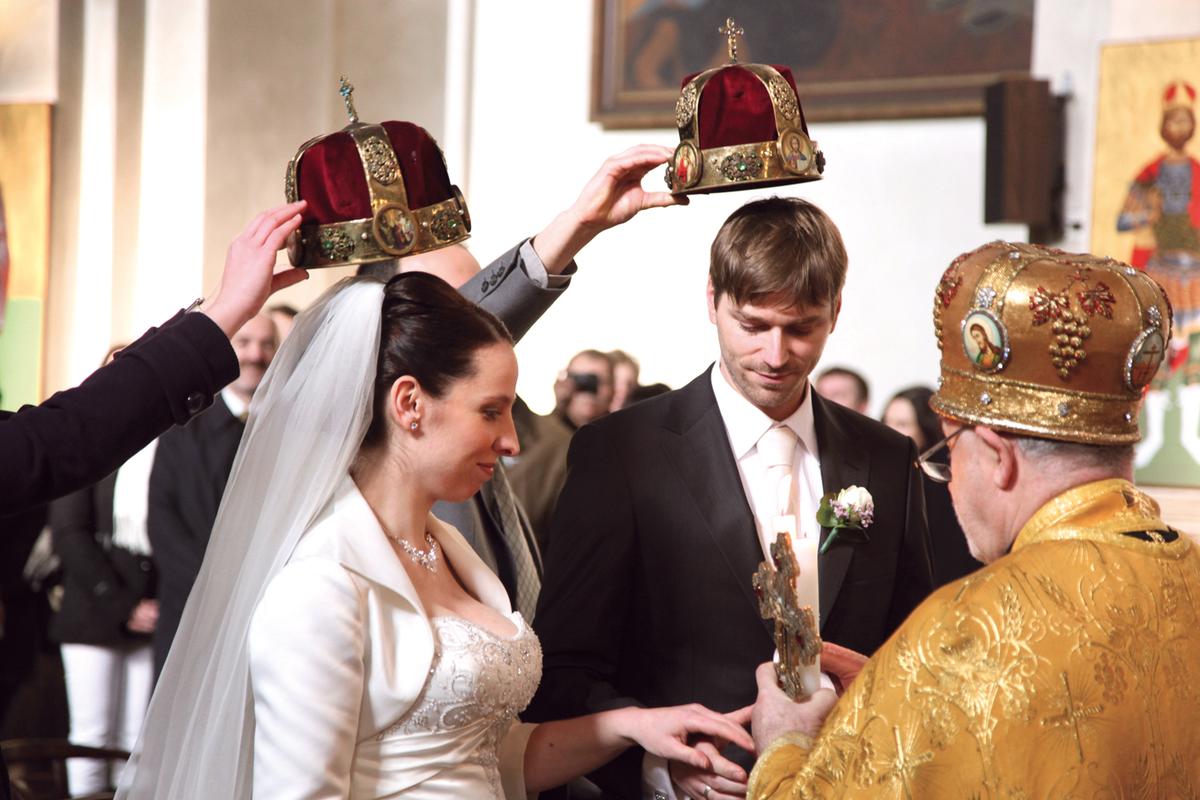 🇷🇺 RussiaEastern Orthodox marriage
A priest blesses rings, then crowns the couple in a two-part sacred riteRite · Engagement and betrothal
 🇳🇬 Nigeria and 3 moreGeleGèlè
The towering Yoruba headtie that elevates the wearer and honors the sacred head.Attire · Procession and arrival
🇺🇦 UkraineSong about the RushnykПісня про рушник (Pisnia pro rushnyk)
A Ukrainian song that celebrates the embroidered cloth used in weddings and family life.Performance · The ceremony
 🇮🇳 India and 1 moreLaavaanਲਾਵਾਂ (Lavan)
The four sacred hymns of the Anand Karaj that guide a Sikh couple through spiritual stages of married life.Rite · The ceremony
 🇧🇩 Bangladesh and 1 moreGaye Holudগায়ে হলুদ (Gayē holud)
The Bengali pre-wedding ritual of applying turmeric paste to bless the couple.Rite · The weeks before
 🇮🇳 India and 1 moreMayian
A pre-wedding cleansing ritual in Punjabi culture where turmeric paste is applied to the couple.Blessing · The weeks before
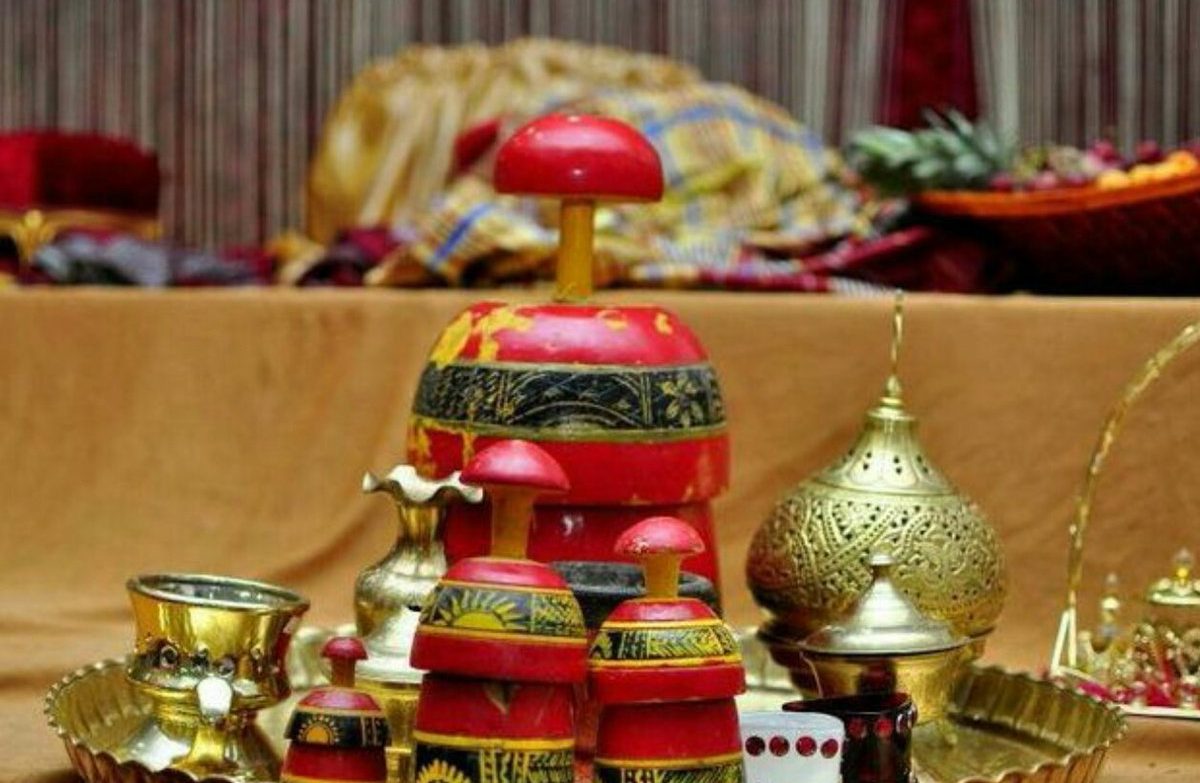 🇸🇩 SudanJirtigالجَرْتِقْ
A Sudanese rite where the groom is symbolically crowned as king before the wedding procession.Rite · The weeks before
 🇪🇸 Spain and 2 moreLas arrasLas arras matrimoniales
Thirteen gold coins exchanged by the couple to symbolize provision and trust during a Christian wedding ceremony.Rite · The ceremony
 🇬🇧 United Kingdom and 3 moreBridal bouquet
The handheld flower arrangement carried by the bride during her wedding ceremony.Attire · The ceremony
🇮🇳 Goa, IndiaHaldi Kumkum
A gathering where married women exchange turmeric and vermilion to celebrate their marital status.Blessing
🇮🇳 IndiaBrahmanippattu
A devotional song and dance performed by Nambeesan women to bless a marriage with the grace of Goddess Kali and Durga.Performance · The weeks before
🇪🇬 Egypt and 1 moreWedding music
The songs and instruments that mark the arrival of the couple and set the mood for the celebration.Performance · The weeks before
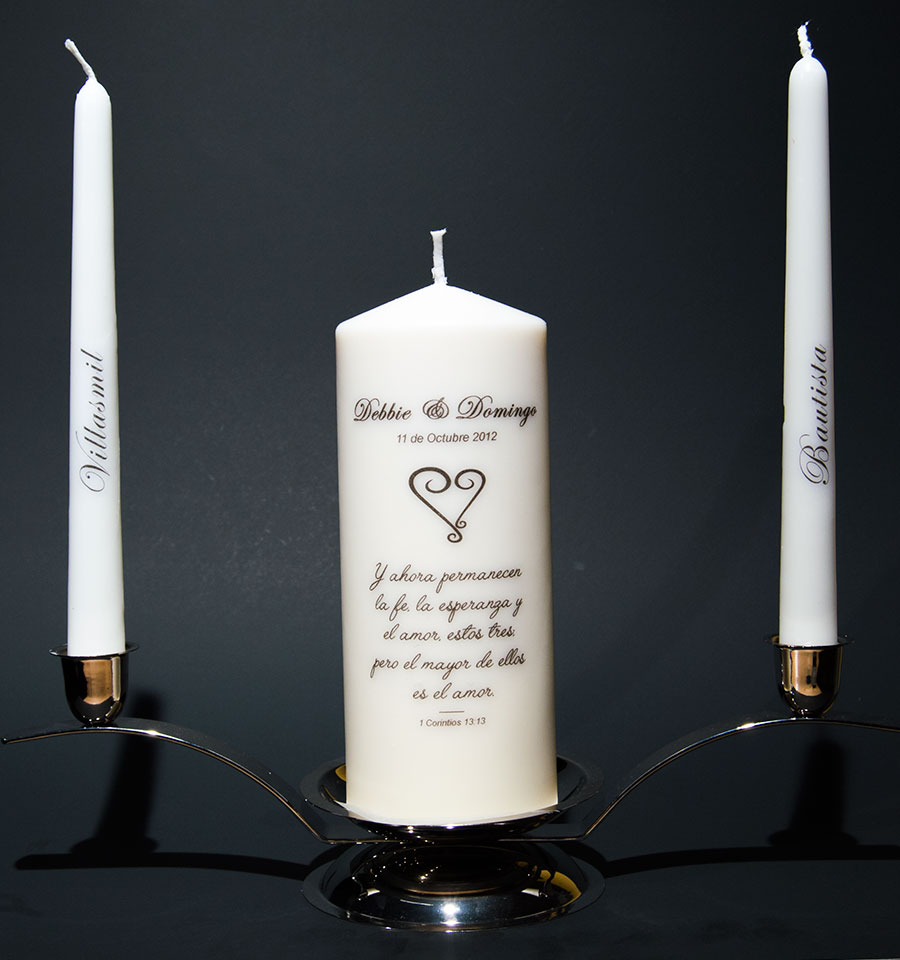 🇺🇸 United StatesUnity candle
A ritual where a couple lights a single candle from two smaller ones to mark their marriage.Rite · The ceremony
 🇮🇳 IndiaLagna Geetલગ્નગીત
Traditional Gujarati wedding songs sung to bless the couple and share joy during ceremonies.Performance · The ceremony
 🇵🇱 Poland and 6 moreKolachколач (kolach), калач (kalach), kołacz, colac, kalács
A braided or ring-shaped bread that marks weddings and major holidays across Eastern Europe.Feast custom · Engagement and betrothal
 🇰🇷 South Korea and 1 morePyebaek폐백
A Korean post-ceremony ritual where the couple bows to the groom's parents and shares symbolic foods.Blessing · After the wedding
 🇮🇳 IndiaAyyavazhi wedding
The sacred rite of Ayyavazhi that treats marriage as a spiritual sacrament and family life as the highest austerity.Rite · Procession and arrival
 🇬🇧 United Kingdom and 2 moreWhite wedding
A formal Western marriage style marked by a white dress and structured ceremony.Attire · The weeks before
 🇷🇺 Moscow, Russia and 5 moreBread and salt
A traditional welcome offering of bread and salt given to guests or newlyweds in Slavic, Baltic, and Balkan cultures.Feast custom · The ceremony
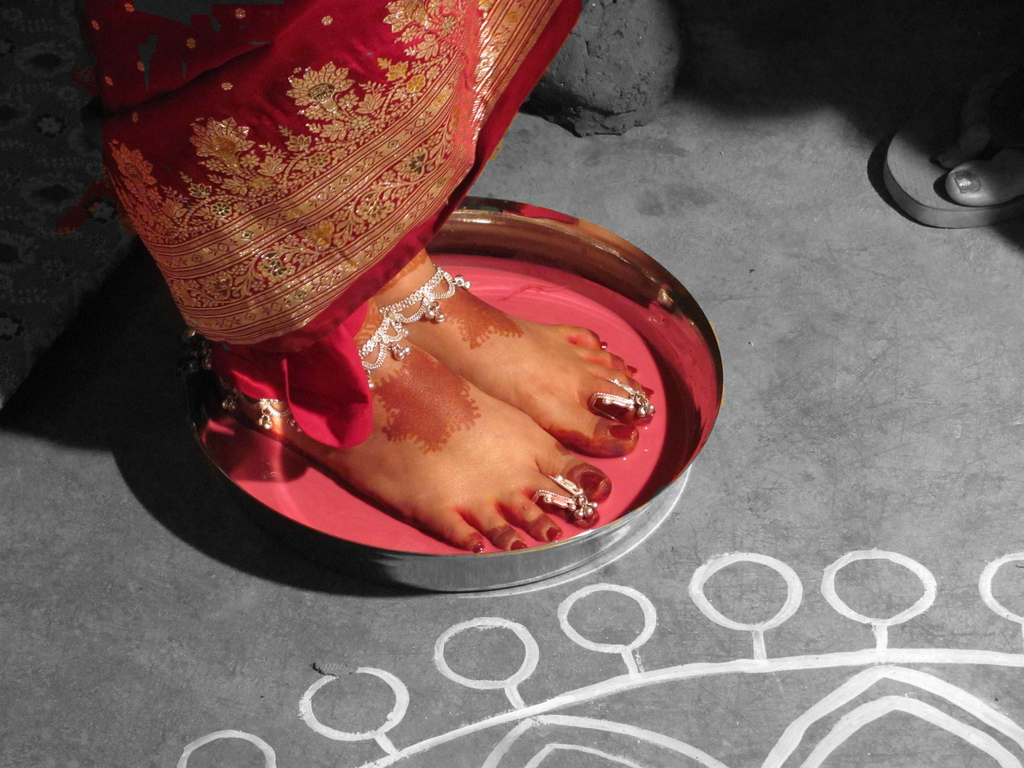 🇮🇳 IndiaVadhu PraveshaBou Boron
The ritual welcoming the bride into her husband's home with blessings and symbolic acts.Blessing · After the wedding
 🇺🇦 Chernivtsi, Ukraine and 1 moreVyshyvankaвишиванка
The embroidered shirt worn by Ukrainians and Belarusians as a symbol of national identity and protection.Attire
🇺🇦 Ukraine and 4 moreKorovaiкоровай (Ukrainian), каравай (Russian), кравай (Bulgarian)
A large round braided bread shared at weddings in Eastern Europe to bless the couple and unite guests.Feast custom · Engagement and betrothal
🇺🇸 United StatesIndian Wedding Blessing
A modern poem often recited at US weddings, falsely attributed to Native American traditions.Blessing · The ceremony
 🇮🇳 IndiaWedding mandapaVivaha Mandapa (विवाह मण्डप)
The temporary Hindu and Jain wedding pavilion where the main rites are performed under a sacred canopy.Setting · The ceremony
Photo credits on this page
The small pictures above come from Wikimedia Commons under free licences. Some are cropped to fit.
- Bread and salt: Olli Niemitalo, CC0, source
- Halay: Post of Moldova, Public domain, source
- Pyebaek: halfGoku, CC BY-SA 2.0, source
- Interfaith marriage in Christianity: Andreas Praefcke, CC BY 3.0, source
- Tulasi Vivah: Unknown author, CC BY 3.0, source
- Sevillanas: Anual, CC BY-SA 4.0, source
- Kente cloth: ZSM, CC BY-SA 3.0, source
- Gaye Holud: Arr4, CC BY-SA 4.0, source
- Gele: Royalesignature, CC BY-SA 4.0, source
- Las arras: penny, CC BY 2.0, source
- Tamagushi: Urashimataro, Public domain, source
- Tabua: Hannes Grobe /AWI, CC BY 3.0, source
- Kenduri: Andreasprasetya, CC BY-SA 4.0, source
- Vyshyvanka: Vasily Andreevich Tropinin, Public domain, source
- Laavaan: Ashish 100, CC BY 2.0, source
- Wimpel: Wikipedia Loves Art participant " The_Grotto ", CC BY-SA 2.5, source
- Red String of Fate: PulauKakatua19, CC BY-SA 4.0, source
- Mayian: Rakzika, CC BY-SA 4.0, source
- Vadhu Pravesha: Shounak Ray, CC BY-SA 2.0, source
- Ayyavazhi wedding: Vaikunda Raja, CC BY-SA 3.0, source
- Kolach: Лобачев Владимир, CC BY-SA 3.0, source
- Rushnyk: Pavlo Boyko, CC BY-SA 2.0, source
- Ancient Roman wedding: Meister der Aldobrandinischen Hochzeit, Public domain, source
- Bridal bouquet: James Vick's Sons (Rochester, N.Y.); Henry G. Gilbert Nursery and Seed, No restrictions, source
- Unity candle: Dvillasmil, CC BY-SA 4.0, source
- Wedding mandapa: Unknown author, CC BY-SA 3.0, source
- Lagna Geet: Sevageet, CC BY-SA 4.0, source
- Ahidus: Fotograaf / photographer: Drs. F.M. (Frits) Cowan (1931 - 2010), CC BY-SA 3.0, source
- Jirtig: Alzain Mohammed, CC BY-SA 4.0, source
- Baci: Dalbera, CC BY 2.0, source
- Ardah: Abodi009, CC BY-SA 3.0, source
- Baju Kurung: Ministry of Information official photographer, Public domain, source
- Mazel tov: Iwona Erskine-Kellie, CC BY 2.0, source
- Eastern Orthodox marriage: VitVit, CC BY 3.0, source
- Alpana: Tripan123, CC BY-SA 4.0, source
- Huipil: Gift in memory of Elizabeth Ege Freudenheim, No restrictions, source
- Mantilla: Museu Valencià d'Etnologia, CC BY-SA 2.0, source