Blessings, luck and omens
Rice and petals, the broom, the horseshoe, the broken glass and other ways of asking for luck.
A wedding is a time when people ask for luck. Rice and petals are thrown, bells rung, a horseshoe hung, a glass broken, a coconut cracked. Many of these customs began as a wish for children, wealth or protection from harm, and they remain because they are fun, meaningful and shared.
Throwing and showering
Rice is thrown at the couple in many parts of the world as a wish for fertility and plenty, and in some places is replaced by petals or birdseed. Italian weddings use confetti sugared almonds, and Moroccan guests shower the couple with dates and milk. Indian brides throw rice behind them as they leave, to give back to the parental home. In Ukraine and Russia guests may throw grain, coins and sweets.
Protection against harm
Many cultures guard against the evil eye or jealous spirits. The Jewish groom breaks a glass, in the Greek wedding the bride may carry a lump of sugar, and in Scotland the blackening of the bride is a boisterous prank. In China firecrackers scare off bad luck, and in Iran a sugar cone is rubbed above the couple's heads. In parts of Africa libations pour water or drink to the ancestors.
Omens and dates
Weather, day and month can also be omens. Rain on the day is lucky in many places, from Hindu communities who see it as a blessing to Western brides who say it is good luck. Dates are chosen by astrologers in India, by the lunar calendar in China, and avoided in Lent, Ramadan or the Omer, when weddings are not held by custom.
Written by the EveryShaadi desk with AI assistance. Background on Blessings, luck and omens (kind of custom). Customs differ from place to place and family to family. If this is your tradition and we have it wrong, tell us.
 🇪🇸 Spain and 3 moreMantilla
A lace or silk veil worn over the head and shoulders by women in Spain and Latin America for church and weddings.Attire · The weeks before
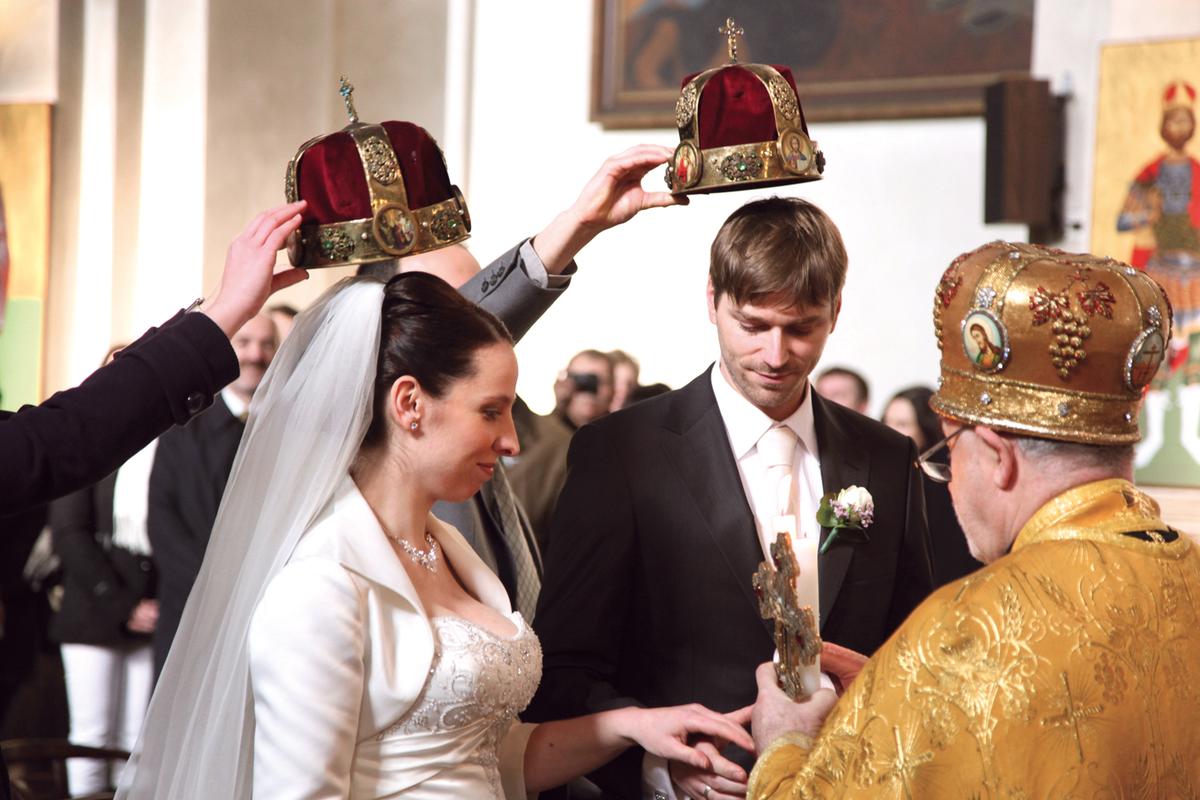 🇷🇺 RussiaEastern Orthodox marriage
A priest blesses rings, then crowns the couple in a two-part sacred riteRite · Engagement and betrothal
🇵🇱 PolandSto lat
A Polish song sung to wish the couple long life and good health during the wedding feast.Performance · The wedding feast
 🇮🇹 Rome, ItalyAncient Roman wedding
A veiled Roman bride, omens checked, was led from her family home to her groom's house.Rite · The weeks before
🇺🇦 UkraineSong about the RushnykПісня про рушник (Pisnia pro rushnyk)
A Ukrainian song that celebrates the embroidered cloth used in weddings and family life.Performance · The ceremony
 🇷🇺 Russia and 2 moreRushnykрушник (Ukrainian), ручнік (Belarusian), ручник/рушник (Russian)
A sacred embroidered cloth that marks life stages and guides the couple during East Slavic wedding ceremonies.Attire · Procession and arrival
 🇩🇪 Hamburg, Germany and 3 moreWimpelווימפל
A linen sash made from a baby boy's circumcision cloth that binds the Torah scroll.Adornment · The weeks before
 🇪🇸 Seville, SpainSevillanas
A folk dance from Seville performed by couples at weddings and festivals.Performance · Reception, dance and gifts
 🇷🇺 Moscow, Russia and 5 moreBread and salt
A traditional welcome offering of bread and salt given to guests or newlyweds in Slavic, Baltic, and Balkan cultures.Feast custom · The ceremony
 🇬🇧 United Kingdom and 2 moreWhite wedding
A formal Western marriage style marked by a white dress and structured ceremony.Attire · The weeks before
 🇪🇸 Spain and 2 moreLas arrasLas arras matrimoniales
Thirteen gold coins exchanged by the couple to symbolize provision and trust during a Christian wedding ceremony.Rite · The ceremony
 🇺🇦 Chernivtsi, Ukraine and 1 moreVyshyvankaвишиванка
The embroidered shirt worn by Ukrainians and Belarusians as a symbol of national identity and protection.Attire
🇺🇦 Ukraine and 4 moreKorovaiкоровай (Ukrainian), каравай (Russian), кравай (Bulgarian)
A large round braided bread shared at weddings in Eastern Europe to bless the couple and unite guests.Feast custom · Engagement and betrothal
 🇵🇱 Poland and 6 moreKolachколач (kolach), калач (kalach), kołacz, colac, kalács
A braided or ring-shaped bread that marks weddings and major holidays across Eastern Europe.Feast custom · Engagement and betrothal
 🇬🇧 United Kingdom and 3 moreBridal bouquet
The handheld flower arrangement carried by the bride during her wedding ceremony.Attire · The ceremony
 🇷🇺 Russia and 2 moreLoving cup
A two-handled vessel shared by the couple to seal their union at a wedding feast.Feast custom · The wedding feast
 🇩🇪 Haslach, Germany and 5 moreBridal crownBrautkrone
A headdress worn by brides in Central and Northern Europe to mark purity and family status.Attire · The ceremony
 🇬🇧 United Kingdom and 3 moreCare cloth
A linen or silk sheet held over the couple during a Christian blessing to symbolize their shared yoke.Rite · The ceremony
 🇩🇪 Berlin, Germany and 5 morePolterabend
The German pre-wedding evening where guests smash porcelain to bring luck to the couple.Blessing · The eve
 🇪🇸 Spain and 2 moreWedding cord
A loop of beads placed around the couple to symbolize their lifelong union in Catholic ceremonies.Rite · The ceremony
🇵🇱 Kraków, PolandWedding of the Weddings
A Polish annual gathering for couples who chose alcohol-free wedding receptions.Feast custom · The ceremony
 🇷🇴 Romania and 4 moreCălușariCălușarii
A traditional Romanian spring dance and male society known for acrobatic leaps and ritual healing.Performance · The weeks before
 🇬🇷 Greece and 1 moreAnastenariaΑναστενάρια (Greek), Нестинарство (Bulgarian)
A barefoot firewalking ritual performed by Orthodox Christian communities in Greece and Bulgaria.Rite · The weeks before
🇳🇴 NorwayEsbat
A monthly Wiccan gathering held around the moon phases for ritual and communityBlessing · The ceremony
 🇵🇱 Poland and 5 moreTuroń
A horned effigy that visits homes during Carnival to wish for fertility and collect gifts.Blessing · The weeks before
 🇺🇦 UkraineMnohaya litaМногая літа
A Ukrainian song sung at weddings to wish the couple many years of life.Performance
 🇮🇹 Venice, ItalyMarriage of the Sea ceremonySposalizio del Mare
The annual ritual where Venice symbolically marries the Adriatic Sea with a golden ring.Rite · The ceremony
 🇮🇹 Viterbo, ItalyMacchina di Santa Rosa
The annual procession in Viterbo where men carry a towering structure to honor their patron saint.Blessing · Procession and arrival
🇭🇷 CroatiaŽudijeŽudije (čuvari Kristova groba)
Catholic guardians who stand watch over a replica tomb of Christ in Dalmatia until Easter Vigil.Rite · The weeks before
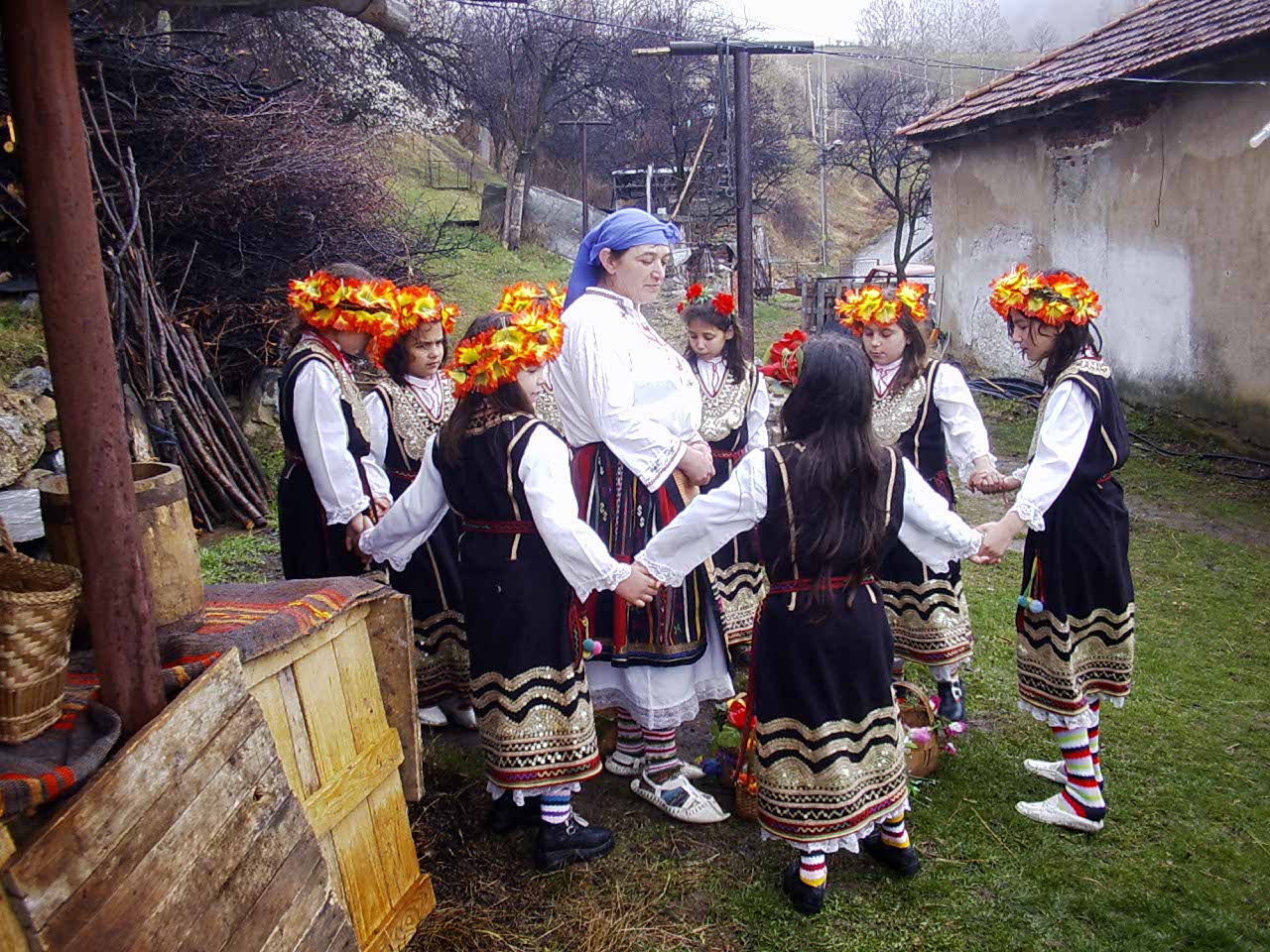 🇷🇸 Serbia and 3 moreLazariceлазарице (Serbian), лазаруване (Bulgarian)
A South Slavic procession of young unmarried women who bless homes before Palm SundayBlessing · The weeks before
 🇧🇪 Bruges, BelgiumProcession of the Holy BloodHeilig Bloedprocessie
A Catholic parade in Bruges that carries a relic on Ascension Day.Blessing · The ceremony
 🇭🇷 CroatiaZa križen
A night-long Maundy Thursday procession on Hvar island that honors the Weeping of the Lady.Blessing · The weeks before
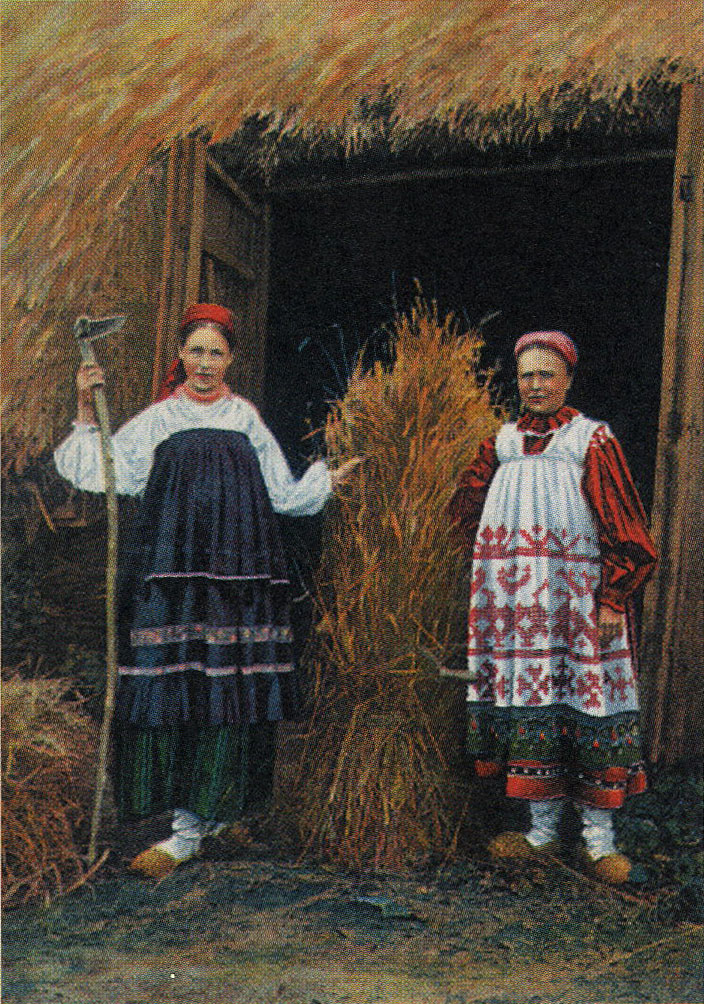 🇵🇱 Poland and 5 moreDożynki
A Slavic harvest festival where farmers bring the last sheaf of grain to the village in a ceremonial wreath.Feast custom · After the wedding
 🇮🇹 Gubbio, Italy and 1 moreSaint Ubaldo DayFesta dei Ceri
A procession where runners carry massive wooden pedestals with saint statues through the streets of Gubbio and Jessup.Blessing · Procession and arrival
 🇵🇱 Poland and 3 moreEaster palmPolish: palma wielkanocna; Lithuanian: verba
A decorated willow or juniper bundle blessed on Palm Sunday to protect homes and crops.Blessing · The weeks before
 🇬🇧 United KingdomWassailing
Singing and drinking to bless trees or homes during the Christmas seasonFeast custom · The weeks before
 🇩🇪 Germany and 5 moreLenten veilFastentuch
A large painted or embroidered canvas that covers the altar during Lent to create a period of visual penance.Rite · The weeks before
 🇧🇬 Bulgaria and 3 moreMartenitsaмартеница
White and red yarn charms worn in the Balkans to welcome spring and wish for good health.Adornment · The weeks before
 🇬🇷 Corfu, GreeceBotidesμπότηδες
The throwing of clay pots filled with water from balconies in Corfu on Holy Saturday to mark the Resurrection.Blessing · The ceremony
🇷🇴 Romania and 3 moreMărțișor
The red and white string charm worn in early spring to welcome the new year.Adornment · The weeks before
 🇩🇪 GermanyBollenhut
A straw hat with woolen pompoms worn by women in specific Black Forest villages as part of their traditional dress.Attire · The weeks before
 🇷🇴 Ieud, RomaniaNunta mortului
A symbolic Romanian rite that dresses an unmarried dead person as a bride or groom to complete their life cycle.Rite · The weeks before
 🇩🇪 Germany and 1 moreLaternelaufen
A lantern procession held by children in Germany and Austria on St. Martin's Day to celebrate sharing and light.Blessing · The weeks before
 🇬🇧 United Kingdom and 5 moreWhite tie
The highest level of formal Western evening attire for men and womenAttire · The ceremony
 🇬🇧 United Kingdom and 1 moreShoe tossing
A wedding superstition where old shoes are thrown at the couple for good luckBlessing · After the wedding
Photo credits on this page
The small pictures above come from Wikimedia Commons under free licences. Some are cropped to fit.
- Dożynki: Unknown author, Public domain, source
- Turoń: Museum: The Seweryn Udziela Ethnographic Museum in Kraków, CC0, source
- Mnohaya lita: Unknown author, Public domain, source
- Procession of the Holy Blood: Cbl62, CC BY-SA 3.0, source
- Wassailing: Joss Smithson, CC BY-SA 2.0, source
- Bread and salt: Olli Niemitalo, CC0, source
- Martenitsa: Unknown author, CC BY-SA 2.0, source
- Interfaith marriage in Christianity: Andreas Praefcke, CC BY 3.0, source
- Sevillanas: Anual, CC BY-SA 4.0, source
- Las arras: penny, CC BY 2.0, source
- Vyshyvanka: Vasily Andreevich Tropinin, Public domain, source
- Wimpel: Wikipedia Loves Art participant " The_Grotto ", CC BY-SA 2.5, source
- White tie: jonlo168, CC BY-SA 2.0, source
- Bollenhut: Unknown author, Public domain, source
- Nunta mortului: Iosif Berman, CC BY-SA 4.0, source
- Laternelaufen: Heinrich Hermanns, Public domain, source
- Botides: Gkaridis0, CC BY 4.0, source
- Kolach: Лобачев Владимир, CC BY-SA 3.0, source
- Rushnyk: Pavlo Boyko, CC BY-SA 2.0, source
- Ancient Roman wedding: Meister der Aldobrandinischen Hochzeit, Public domain, source
- Bridal bouquet: James Vick's Sons (Rochester, N.Y.); Henry G. Gilbert Nursery and Seed, No restrictions, source
- Loving cup: Rhodian at English Wikipedia, CC BY-SA 3.0, source
- Bridal crown: Daderot, CC0, source
- Lazarice: Svetlina bov at Bulgarian Wikipedia, Public domain, source
- Anastenaria: Artkostov, CC BY-SA 4.0, source
- Za križen: E.mil.mil, CC BY-SA 3.0, source
- Marriage of the Sea ceremony: Francesco Guardi, Public domain, source
- Saint Ubaldo Day: Marco Riccardini, CC BY-SA 4.0, source
- Care cloth: Unknown author, Public domain, source
- Polterabend: 4028mdk09, CC BY-SA 3.0, source
- Lenten veil: Plutowiki, CC0, source
- Shoe tossing: Zarateman, CC0, source
- Eastern Orthodox marriage: VitVit, CC BY 3.0, source
- Macchina di Santa Rosa: Amras Carnesîr, CC BY-SA 3.0, source
- Călușari: El bes, CC BY 3.0, source
- Easter palm: Evaldas Liutkus, CC BY 2.0, source
- Wedding cord: Phil! Gold, CC BY-SA 2.0, source
- Mantilla: Museu Valencià d'Etnologia, CC BY-SA 2.0, source