Family roles and who does what
Who gives the bride away, who walks, who stands witness, who pays and who sits where.
A wedding is a family event first. Who walks the bride, who stands as witness, who pays, who sits at the head table and who is the best man are all roles with their own names and history. They show how a community thinks about family, and they change as families change.
Giving and receiving
Western weddings often have the father walk the bride down the aisle, a custom with roots in the transfer of authority. Hindu kanyadaan, the gift of the daughter, is performed by the bride's parents, though some now reinterpret or skip it. In Jewish weddings both sets of parents may walk the groom and the bride to the chuppah. In Muslim weddings a wali, often the father, acts for the bride, and in the Hanafi school a woman may also contract her own marriage.
Witnesses and supporters
Greek and Orthodox weddings have a koumbaros or koumbara who crowns the couple and becomes a lifelong family friend. Spanish and Latin American weddings have padrinos and madrinas who sponsor parts of the day. English weddings have the best man and the maid of honour, and Hindu weddings the bride's brother, who pours rice into her hands in the laja homa. Jewish and Muslim weddings need two witnesses.
What is changing
Mothers now often walk their daughters, couples enter together, and step-parents and same-sex parents have a clear place. Many couples pay for their own weddings. The role of in-laws is still strong in places where couples live with the husband's family, and brides are pressing for fair treatment of their own parents too.
Written by the EveryShaadi desk with AI assistance. Background on Family roles and who does what (kind of custom). Customs differ from place to place and family to family. If this is your tradition and we have it wrong, tell us.
 🇩🇪 Berlin, Germany and 5 morePolterabend
The German pre-wedding evening where guests smash porcelain to bring luck to the couple.Blessing · The eve
🇰🇪 KenyaKoito
A Kalenjin dowry negotiation ritual that marks the formal agreement between families.Gift custom · Engagement and betrothal
 🇮🇳 India and 5 moreDowry
A payment of wealth from the bride's family to the groom or his household at marriage.Gift custom · Engagement and betrothal
 🇹🇴 Tonga and 2 moreTaʻovala
The woven pandanus mat worn around the waist for formal occasions and weddings in Tonga.Attire · The weeks before
 🇮🇳 India and 2 moreArranged marriage in the Indian subcontinent
The family-led matchmaking process that shapes most marriages across South Asia.Betrothal · Finding a match
 🇬🇧 United KingdomPage boy
A young male attendant who carries the bride's train or wedding rings during the ceremony.Family role · Procession and arrival
 🇨🇳 Beijing, China and 1 moreMarriage market
Public spaces where families gather to find spouses for their children through listings and brokers.Betrothal · Finding a match
 🇳🇬 NigeriaYoruba traditional weddingIgbeyawo
The multi-day Yoruba celebration of marriage featuring traditional attire, gift lists, and lively dancing.Feast custom · Engagement and betrothal
🇹🇴 TongaLakalaka
A formal Tongan group dance where performers stand in rows and move their arms to express respect.Performance · The ceremony
 🇬🇷 Greece and 2 moreEngagement party
A gathering to announce a new engagement and introduce the two families before the wedding.Betrothal · Engagement and betrothal
 🇹🇱 Dili, Timor-Leste and 1 moreTimorese wedding traditionsBarlake
The gift exchange and family alliance rituals practiced on the island of Timor.Gift custom · Finding a match
 🇺🇸 Pittsburgh, United States and 1 moreCookie table
A display of assorted homemade cookies served alongside the wedding cake at a reception.Feast custom · Reception, dance and gifts
 🇨🇳 China and 6 moreRed envelope红包 (hóngbāo)
A gift of money in a red paper sleeve exchanged at weddings and holidays to bring good luck.Gift custom · The wedding feast
 🇨🇳 Guangdong, China and 2 moreQungua裙褂
A two-piece embroidered jacket and skirt worn by Cantonese brides for their wedding ceremony.Attire · The ceremony
🇨🇦 Montreal, Canada and 2 moreMarriage à la façon du pays
The customary union between European fur traders and Indigenous women in North AmericaBetrothal · Finding a match
🇬🇧 United Kingdom and 2 moreQuaker wedding
A silent worship service where Friends marry each other without clergy or vows to God alone.Rite · The ceremony
 🇬🇧 United Kingdom and 5 moreBanns of marriage
Public announcements in church or town hall to reveal legal impediments before a wedding.Vow · The weeks before
 🇺🇸 United States and 3 moreJumping the broom
A wedding ritual where a couple leaps over a broom to mark their unionRite · The ceremony
🇬🇧 United Kingdom and 1 moreRèiteach
A Scottish Gaelic betrothal agreement between families in the Highlands and Canada.Betrothal · Engagement and betrothal
🇪🇬 EgyptNikah 'urfiنكاح العرفي
An unregistered Islamic marriage contract kept secret from state authorities and often families.Vow · Engagement and betrothal
🇮🇳 IndiaGauna
The ceremony that marks the start of conjugal life for a bride in northern IndiaRite · After the wedding
 🇫🇷 France and 5 moreProxy marriage
A ceremony where one or both partners are absent and represented by another person.Vow · The ceremony
🇪🇬 Egypt and 2 moreMisyar marriageزواج المسيار (zawāj al-misyār)
A Sunni Islamic contract where the wife waives cohabitation and financial support in exchange for a legal union.Vow · Engagement and betrothal
 🇺🇸 United States and 5 moreSealing (Mormonism)
A temple ritual that binds couples and families together for eternity.Rite · The ceremony
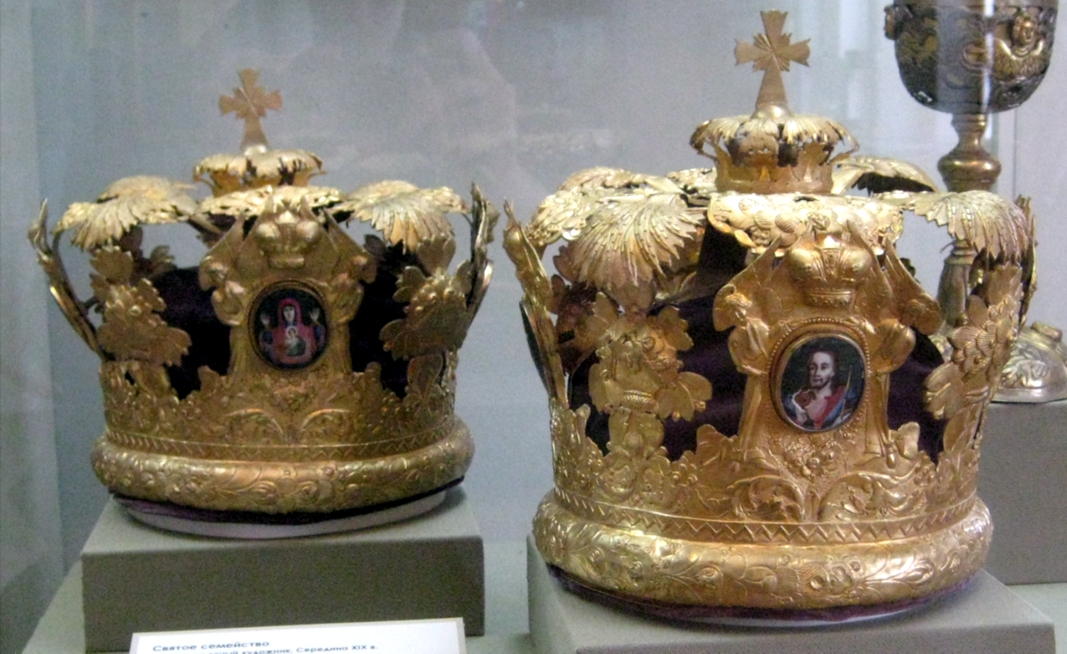 🇸🇾 Syria and 3 moreMystery of Crowning
The crowning ritual in Eastern Christian weddings that marks the couple as king and queen.Rite · The ceremony
🇨🇳 China and 5 morePosthumous marriageminghun
A union performed when one or both partners have died, kept in parts of Asia and permitted by law in a few nations.Betrothal · After the wedding
 🇺🇸 United States and 5 moreInterfaith marriage
A union between spouses of different faiths, navigating legal and religious boundaries across the world.Vow · Engagement and betrothal
 🇺🇸 United States and 2 moreLavender marriage
A heterosexual union formed to hide the queer identity of one or both partners and protect a public career.Vow · Engagement and betrothal
 🇧🇷 Rio de Janeiro, Brazil and 1 moreSame-sex marriage in Brazil
The nationwide legal recognition of same-sex unions following a 2013 judicial ruling.Modern · Engagement and betrothal
🇮🇱 Israel and 5 moreLevirate marriage
A custom where a man marries his deceased brother's widow to protect her and keep the family line intact.Betrothal · After the wedding
 🇳🇱 Amsterdam, Netherlands and 5 moreSame-sex marriage
The legal union of two people of the same sex or gender, recognized in dozens of countries.Modern · Engagement and betrothal
 🇮🇳 India and 5 moreWedding veil
A cloth covering the head or face worn by brides and grooms to mark marriage.Attire · The ceremony
🇧🇹 Bhutan and 5 moreSororate marriage
A practice where a man marries his late or infertile wife's sister to keep family ties strong.Family role · After the wedding
🇮🇶 Iraq and 1 moreInterdenominational marriage
A wedding between two people of different denominations within the same religion.Vow · Engagement and betrothal
 🇨🇳 Beijing, China and 4 moreHeqin和親 (Héqīn)
A historical Chinese policy of uniting imperial families with neighboring rulers to secure peace.Betrothal · Engagement and betrothal
 🇨🇳 ChinaPlace card
A small card that tells a wedding guest where to sit and who sits next to them.Feast custom · Reception, dance and gifts
🇲🇾 Malaysia and 2 moreIban wedding
The traditional marriage rites of the Iban people in Borneo, involving longhouse announcements and spiritual blessings.Rite · Finding a match
🇵🇱 Kraków, PolandWedding of the Weddings
A Polish annual gathering for couples who chose alcohol-free wedding receptions.Feast custom · The ceremony
 🇷🇴 Romania and 4 moreCălușariCălușarii
A traditional Romanian spring dance and male society known for acrobatic leaps and ritual healing.Performance · The weeks before
🇳🇴 NorwayEsbat
A monthly Wiccan gathering held around the moon phases for ritual and communityBlessing · The ceremony
🇦🇫 Afghanistan and 1 moreBaad
A customary settlement where a girl or woman is handed over to an offended household to close a dispute.Gift custom
 🇮🇩 IndonesiaSlametan
A communal Javanese feast that brings neighbors together for peace and social unity.Feast custom · The weeks before
 🇬🇷 Kythnos, GreeceBalosΜπάλος της Κύθνου
A vigorous paired folk dance from the Greek island of Kythnos featuring continuous back-to-back turns.Performance · The wedding feast
 🇿🇦 South AfricaPolygamy in South Africa
The practice of men marrying more than one wife under customary and Islamic law in South Africa.Vow · Engagement and betrothal
🇿🇦 South AfricaUkungenwa
A South African custom where a widowed woman is inherited by her late husband's male relatives.Family role · After the wedding
🇸🇦 Saudi Arabia and 5 moreCousin marriage in the Middle East
A traditional practice of marrying close relatives, especially paternal cousins, across Middle Eastern communities.Betrothal · Finding a match
🇺🇸 United States and 1 morePostnuptial agreement
A contract signed after marriage to plan for divorce or death.Vow · After the wedding
 🇮🇪 Galway, Ireland and 1 moreMarriage stone
A carved stone bearing the initials and date of a newly married couple, placed on a building to mark their union.Adornment · After the wedding
Photo credits on this page
The small pictures above come from Wikimedia Commons under free licences. Some are cropped to fit.
- Interfaith marriage in Christianity: Andreas Praefcke, CC BY 3.0, source
- Lavender marriage: Katharine Cornell and the Playwrights' Company; Vandamm Studio, photog, Public domain, source
- Same-sex marriage: Stefano Bolognini, CC BY-SA 3.0, source
- Same-sex marriage in Brazil: Fabio Pozzebom/ABr, CC BY 3.0 br, source
- Slametan: Unknown author, CC BY-SA 3.0, source
- Polygamy in South Africa: Unknown author, CC BY 4.0, source
- Wedding veil: David Ring, CC0, source
- Marriage stone: Kim Traynor, CC BY-SA 3.0, source
- Balos: DNK GR, CC BY-SA 4.0, source
- Polterabend: 4028mdk09, CC BY-SA 3.0, source
- Dowry: Vassili Vladimirovich Pukiryov, Public domain, source
- Taʻovala: James Foster, CC BY-SA 2.5, source
- Arranged marriage in the Indian subcontinent: Hindustanilanguage, CC BY-SA 3.0, source
- Page boy: Joe Cheng, CC BY 2.0, source
- Marriage market: Tim Sheerman-Chase, CC BY 2.0, source
- Yoruba traditional wedding: Fhadekhemmy, CC BY-SA 4.0, source
- Engagement party: Melissa Gupta, CC BY-SA 2.0, source
- Timorese wedding traditions: ColinTrainor, CC BY-SA 4.0, source
- Sealing (Mormonism): NewNameNoah, CC BY 4.0, source
- Cookie table: Chris Winters, CC BY-SA 2.0, source
- Red envelope: Oldie~commonswiki, Public domain, source
- Place card: Elizabeth Sullivan, CC BY-SA 2.0, source
- Qungua: Fduyjfroea Homz, CC BY-SA 4.0, source
- Heqin: पाटलिपुत्र, CC BY-SA 4.0, source
- Călușari: El bes, CC BY 3.0, source
- Banns of marriage: After William Hemsley, CC0, source
- Jumping the broom: credited only as "Hipstamatic shots, CC BY-SA 2.0, source
- Mystery of Crowning: Shakko, CC BY-SA 3.0, source
- Proxy marriage: Alejandro Cicarelli, Public domain, source